
Parcel Locker vs Parcel Box: The Short Answer
A parcel locker is a shared, network-operated facility — you travel to it. A parcel box sits at your own address and receives deliveries while you are out. In a straight parcel locker vs parcel box comparison, the box wins on convenience and the locker wins on zero installation. Everything else comes down to how often you receive parcels, whether you have a front fence or wall to mount something on, and who is paying.
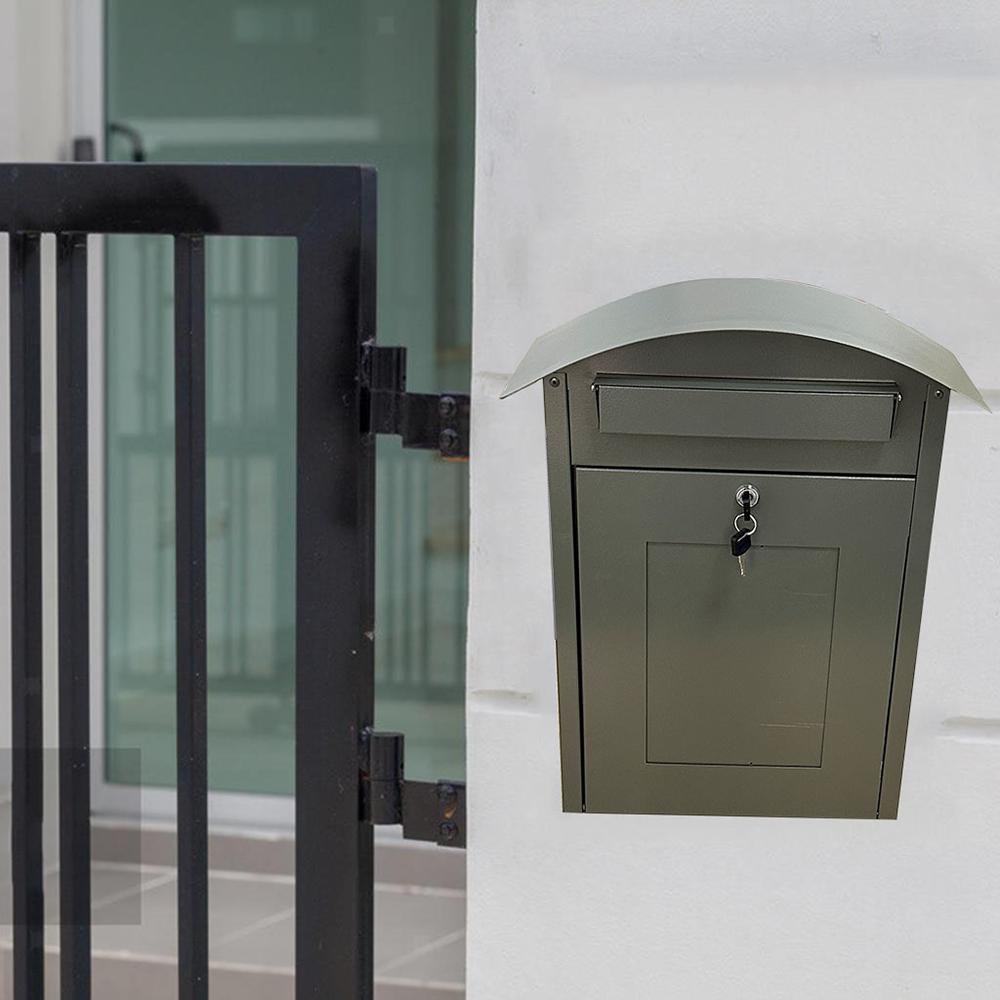
Below is the full breakdown, including costs, capacity and the situations where each option is genuinely the better buy.
How Each Option Actually Works
Parcel lockers
Lockers are installed by carriers or third-party networks in shopping centres, train stations and petrol stations. When a courier cannot deliver, the parcel is redirected to a nearby locker and you receive a code. Access windows are typically 48 hours to a few days; after that the parcel is returned to the depot. Lockers are free for the recipient but only available where the network has coverage.
Parcel boxes
A parcel box is a secure container mounted at your address — wall-mounted, on a post, or built into a brick wall. The courier drops the parcel through a one-way opening, and you retrieve it with a key, combination or rear door. No redirect, no code, no deadline. The trade-off is that you pay for the hardware and, in most cases, the installation.
Head-to-Head Comparison
| Factor | Parcel locker | Parcel box |
|---|---|---|
| Upfront cost to the recipient | $0 | $120 – $480 |
| Where it is | Shared public site | Your own address |
| Collection deadline | 48 hours – 3 days | None |
| Works for bulky parcels | Limited by compartment size | Depends on box volume |
| Weather protection | Excellent (indoors) | Excellent if specified correctly |
| Multi-carrier support | Network-dependent | All carriers |
| Suits renters | Yes | Only with landlord consent |
| Suits strata buildings | Coverage permitting | Yes, as a shared mailbox bank |
Cost Over Five Years
Lockers look free because the fee is absorbed by carriers and retailers. A parcel box costs real money up front — but a $280 unit with a fifteen-year service life works out at under $19 a year, with no trips, no missed collections and no parcels returned to depot. If you receive more than roughly twenty parcels a year and value your time, the box is the cheaper option in practice.
For a rental or an apartment where a permanent fixture is not possible, the locker is the sensible choice. For owner-occupiers, a parcel box is the option that keeps working when a locker is full, closed or inconveniently located.
Capacity: Where People Get Caught Out
The most common parcel box complaint is not security — it is that the box accepts the wrong shape. A courier handles cartons up to 400 mm deep and bulky satchels, not just envelopes, so internal depth matters more than the footprint. Locker compartments have the same issue: an oversized carton simply will not fit and gets taken away.
Before buying either option, measure your five largest recent deliveries. If the largest box is over 350 mm deep, look for a rear-access parcel box with a floor-level retrieval door rather than a top-drop model.
Security and Package Theft
Both options defeat opportunistic porch theft, but in different ways. A locker is only reachable with a one-time code, and the parcel is out of sight entirely. A parcel box relies on the quality of its lock and the way the opening is designed: a genuinely secure unit uses a one-way baffle so a hand cannot reach in, a locking mechanism that is not externally removable, and a body that is anchored rather than simply placed.
Where parcel theft is a known problem in your suburb, the practical combination is a bricked-in or bolted-down box plus local pickup instructions in your delivery preferences.
Which One Fits Your Situation?
Choose a parcel locker if you…
- Rent and cannot modify the property
- Are rarely home during the day but pass a locker site on your commute
- Receive fewer than ten parcels a year
Choose a parcel box if you…
- Own your home or manage a building
- Receive regular online orders, including bulky items
- Want deliveries handled by every carrier without redirects
- Are a strata body that wants one shared solution — a cluster system functions like an on-site locker network that residents own outright
Buildings weighing this up often find the best result is a cluster mailbox and parcel bank in the lobby plus individual parcel boxes for ground-floor units with street frontage.
Installation and Compliance Notes
A parcel box must be positioned so a courier can reach the opening from the street or footpath without stepping onto a road, and the opening height matters: a delivery point between roughly 900 mm and 1,200 mm above ground is workable for both couriers and residents. If you are installing on a nature strip or near a kerb, check with your local council first, and confirm the placement rules in the Australia Post delivery guidance.
Frequently Asked Questions
Can Australia Post deliver to a parcel box?
Yes. A private parcel box is treated as a delivery point at your address, and posties will use it when it is safe and accessible. Note that a parcel box is separate from your letterbox, and both are needed for a complete setup.
Do parcel lockers accept returns?
Many networks allow locker drop-off for returns, but only when the retailer has enabled it. A parcel box cannot send parcels; returns still go to a post office or pickup point.
Can two households share one parcel box?
They can, but retrieval becomes the issue — whoever holds the key has access to everything. Shared buildings are better served by a compartmentalised bank where each dwelling has its own door.
What happens if a parcel is too big for the box?
The courier will either leave a card or take the parcel to the nearest depot. Choosing the right internal volume in the first place is why a parcel box size guide is worth reading before you commit.
Next Step
Decide on the access model first — one-way top drop, rear access, or a compartmentalised bank — then size the box against your largest realistic delivery. For help specifying a model for a home, unit block or estate, contact WELDON with your measurements and mounting method.