
Choosing the right parcel box size matters more than most buyers expect. Pick one that is too small and couriers cannot fit your parcels inside — every delivery fails and the box earns nothing. Pick one that is too large and you sacrifice fence space, budget and street appeal for capacity you never use. This guide explains standard parcel box dimensions, shows you how to match size to your actual delivery volume, and lists the sizing mistakes we see most often.
Why Parcel Box Size Matters More Than You Think
A parcel box only works if the courier can complete the drop without your help. When the deposit opening is too tight for the parcels you actually receive, the courier reverts to the old behaviour: a card in the letterbox and a trip to the depot. When the box is oversized for a small townhouse frontage, it dominates the entrance and costs more than necessary. The right parcel box size sits in the middle — matched to your real parcel profile, your available space and your installation type.
Standard Parcel Box Sizes Explained
Most residential parcel boxes on the Australian and European market fall into three size classes. The figures below reflect the ranges across the WELDON product line, which covers compact wall-mount units through to large freestanding and brick-in models.
| Size class | External dims (H × W × D) | Typical deposit opening | What fits inside |
|---|---|---|---|
| Compact | 400–520 × 220–250 × 120–220 mm | 215 × 30 mm slot | Letters, documents, A4 satchels, shoe-box items |
| Medium | 600–800 × 380–420 × 300–350 mm | 280–300 × 180–220 mm hatch | Clothing boxes, books, small appliances, groceries |
| Large | 900–1,100 × 400–450 × 350–450 mm | 300–320 × 220–250 mm hatch | Multiple parcels per drop, larger boxed goods |
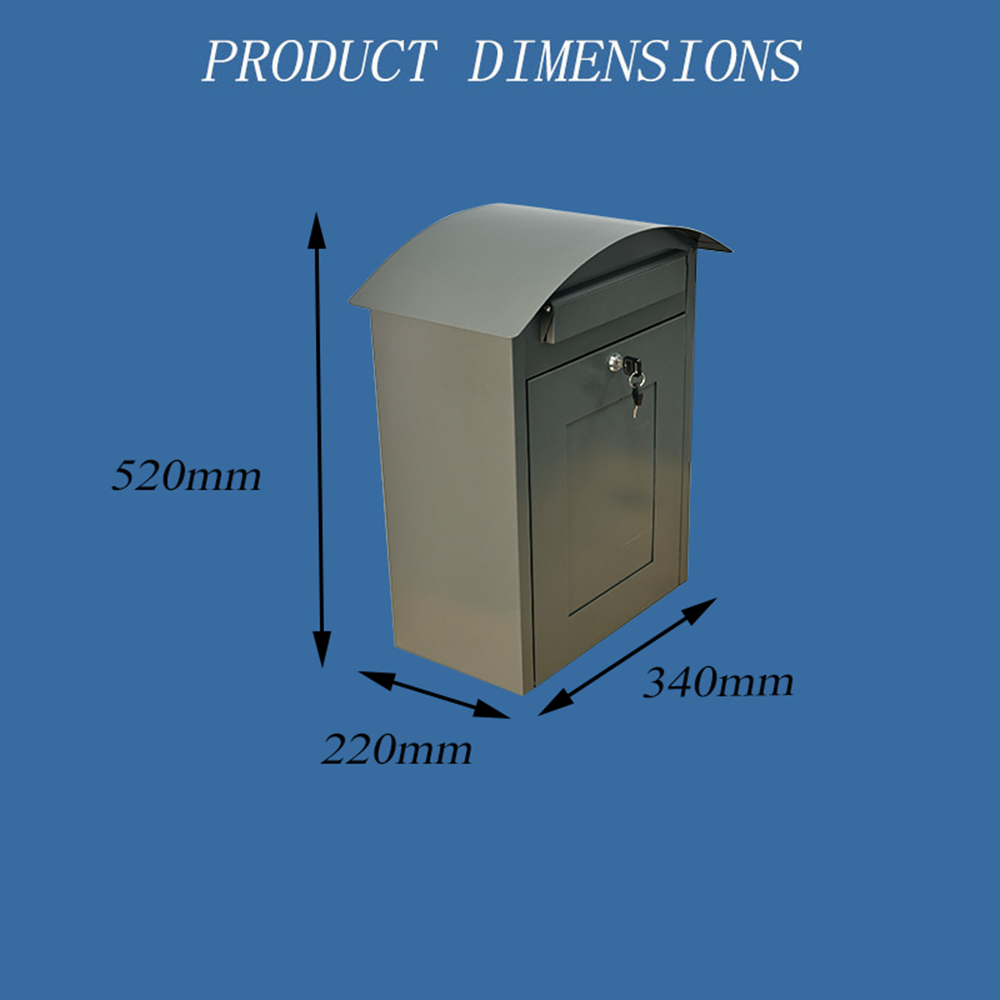
As a rule of thumb: a compact unit suits letter-focused homes that occasionally take small satchels; a medium unit covers the weekly online shopper; a large unit handles family-level volume or multi-parcel drops in one visit.
Measure These Three Things Before You Buy
1. Your available installation space
For freestanding models, measure the ground footprint plus at least 100 mm of clearance so the retrieval door can open fully. For wall-mounted boxes, check both the mounting width and the height — the deposit hatch should sit around waist height so couriers can use it comfortably. For a brick-in parcel box, confirm the cavity dimensions with your bricklayer or builder before the fence is built; retrofitting a masonry column later is expensive.
2. The parcels you actually receive
Open your last month of delivery notifications and look at the parcel dimensions listed by the retailer. Most clothing, books and grocery items ship in boxes under 350 mm on the longest side — a medium class parcel box size handles them easily. Bulky categories like small appliances, pet food and homewares push past 400 mm, which calls for a large unit.
3. The deposit and retrieval openings
External dimensions can be misleading: two boxes with identical footprints can have very different usable openings. Check the hatch measurements and the internal chamber depth, and make sure the retrieval door swings wide enough for you to pull out a box without wedging it.
Real Examples: Matching Size to Lifestyle
- Inner-city townhouse, shops online two or three times a week: a medium freestanding or wall-mounted box beside the front door covers nearly every parcel.
- Family home with a brick fence: a brick-in medium or large unit combines the mail slot and parcel chamber, built flush into the new fence line.
- Weekend or rural property: a large freestanding box with a generous hatch absorbs multi-day delivery gaps when nobody is around to collect.
- Home-based business shipping and receiving daily: go one size class up and consider a two-door model so incoming and outgoing items never mix.
Common Parcel Box Size Mistakes
- Buying by outside looks only. The deposit opening, not the silhouette, decides what fits.
- Ignoring door swing. A retrieval door that opens onto a wall or garden bed makes collection awkward.
- Forgetting growth. Online shopping volume tends to rise year over year — buying one class up future-proofs the purchase.
- Over-sizing on show. An oversized box on a small frontage draws attention; a right-sized, lockable unit blends in and protects better.
Frequently Asked Questions
What size parcel box do I need for standard courier deliveries?
For typical Australia Post and courier parcels — clothing boxes, books, small household goods — a medium unit with an external height of 600–800 mm and a hatch of roughly 300 × 200 mm covers the vast majority of drops. Courier satchel sizes are published by carriers such as Australia Post and are a useful cross-check before you order.
Will an A4 satchel fit in a compact parcel box?
Yes. A4 satchels are around 310 × 225 mm flat, which passes through most compact and medium hatches with room to spare — this is exactly what compact units are designed for.
How big should a parcel box be for a family of four?
Plan for three to five parcels per week arriving unattended: a large class unit (900 mm or taller) or a medium unit with a multi-compartment design prevents overflow between collections.
Ready to pick your size? Compare the full WELDON parcel box range, review the brick-in parcel box options for new fences and builds, or contact our team with your parcel profile and we will recommend the right parcel box size — including OEM/ODM sizing for retailers and distributors.