
Why Businesses Need a Commercial Parcel Box
A commercial parcel box solves a problem that costs Australian businesses real money every week: failed deliveries. When a courier arrives at an office, clinic, warehouse or retail store that is closed, in a meeting, or simply without a loading dock attendant, the parcel goes back to the depot. That means a redelivery fee, a delayed job, or a technician standing idle because the part they needed never arrived.
A commercial parcel box is a secure, unattended delivery point sized for business volumes — not a domestic letterbox with a bigger lid. This guide covers how to size one, what to specify, and how facilities managers usually justify the spend.
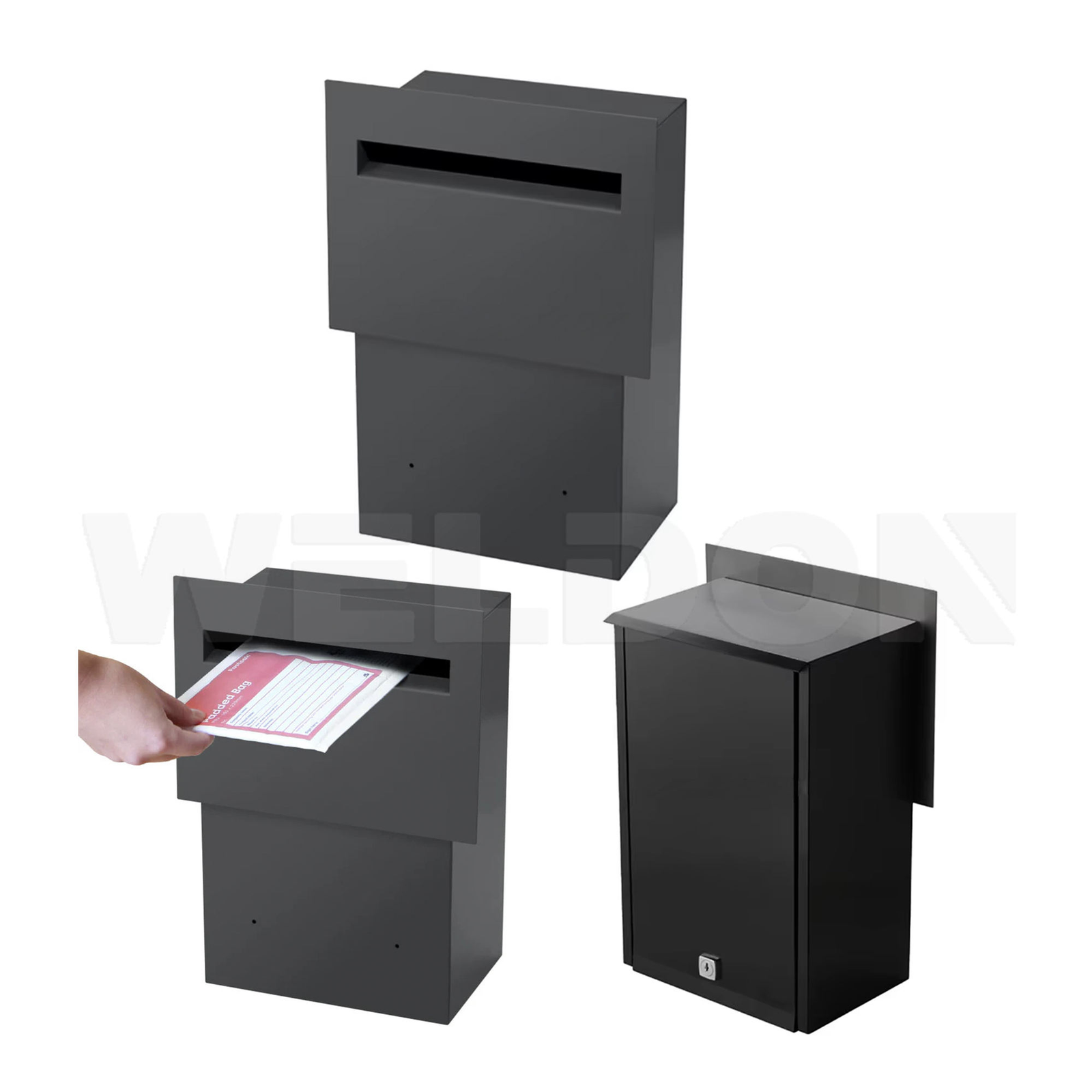
The Real Cost of Missed Deliveries
Put a number on it before you put a number on the hardware. For a typical small business this is what one failed delivery a week looks like:
| Cost line | Typical impact |
|---|---|
| Redelivery fee per parcel | $10 – $25 |
| Staff time rebooking and chasing | 20 – 40 minutes per incident |
| Delayed job or downtime | $50 – $500+ depending on trade |
| Lost or mis-delivered items | $30 – $300 per occurrence |
Even at the conservative end, a single weekly failure runs to well over $1,000 a year — comfortably more than the cost of a proper delivery point.
Five Business Scenarios and What They Need
1. Retail stores
Stock deliveries arrive during trading hours, but online customer returns and courier pickups do not. A street-facing commercial parcel box near the entry handles both: overnight stock drops without an early staff start, and a labelled return point customers can use without interrupting the counter.
2. Offices and co-working spaces
Volume is high and parcels are small — laptops, samples, documents. What matters most is compartmentalisation: staff need to retrieve their own items without asking reception, which points to a multi-door bank rather than a single large box.
3. Warehouses and industrial sites
The problem is oversized and awkward items: pallet parts, long cartons, equipment cases. Here the requirement is a wide, low opening with a ramp or floor-level access, plus a lock that a courier can use without a site induction.
4. Medical and veterinary clinics
Deliveries are temperature-sensitive and often urgent. Look for a shaded, insulated compartment, a locking door to keep supplies out of reach, and a location that does not block an ambulance bay or fire path.
5. Schools and campuses
Deliveries land constantly and must be kept away from students. Mounted units inside a secure compound, with staff-only rear access, are the standard solution.
Sizing by Throughput, Not Guesswork
Match the hardware to the daily parcel count and the largest realistic item:
- Up to 10 parcels a day: one large single-door unit, 400 mm internal depth
- 10–30 a day: a two- or three-door rear-access unit, or two units side by side
- 30+ a day: a compartmentalised bank with individually lockable doors and a labelled courier bay
Measure your three largest recent deliveries before you order. Oversized cartons are the single most common reason a delivery point fails in practice — the logic is the same as sizing a home parcel box, just scaled for business volume.
Access Control, Tracking and Liability
Three operational questions decide the specification:
- Who opens what? A single shared key is simple but creates no accountability. Per-door locks let you assign a compartment to a department or a person.
- Who signs? If a courier needs proof of delivery, fit a camera or require a signature code, and agree in writing that delivery into the box counts as receipt.
- What happens to errors? Set a house rule: misdirected items are logged and photographed before being moved, and the box is checked at a consistent time each day.
Worth stating plainly in your supplier contracts and insurance review: goods are only “delivered” once they are inside a locked area, not when they are left on a doorstep. A commercial delivery point closes that gap.
Weather, Location and Compliance
Position the unit where a courier can reach it without entering a restricted area, and where it does not obstruct an exit, a hydrant or an accessible path of travel. Under the National Construction Code, egress paths and accessible routes have clear-width requirements that a badly placed fixed unit can breach — worth checking before the concrete goes down.
For exposed sites, specify a corrosion-resistant finish: hot-dip galvanised steel or a marine-grade powder coat will outlast standard painted steel by many years in coastal or industrial environments. Shade matters too, particularly for clinics receiving temperature-sensitive items.
Procurement Checklist for Facilities Managers
- Daily parcel volume measured over four weeks, not estimated
- Largest item dimensions captured in millimetres
- Number of independent compartments required
- Rear or front access, and who needs which
- Locking type and key management plan
- Corrosion classification for the site
- Loading and courier approach path confirmed
- Delivery-into-box policy written into supplier terms
- Signage for couriers stating access hours and instructions
- Warranty, spare parts and lead time confirmed in writing
Bulk buyers ordering multiple units usually reduce cost further by consolidating freight and standardising finishes — and manufacturers will often produce custom dimensions or engraved branding for orders of that scale. If you are also updating customer-facing letterboxes at the same time, a single mailbox specification across the site keeps maintenance simple.
Frequently Asked Questions
Can one unit serve a whole site?
Only if the volume is genuinely low. Once more than ten parcels arrive daily, a single-door box becomes a bottleneck at exactly the moment staff are busiest.
Do we need power on site?
No. Mechanical locks are more reliable in an industrial environment. Power is only needed if you want camera evidence or app-based access logs, in which case plan the run before installation.
How long does installation take?
A wall-mounted or post-mounted unit is roughly half a day for a handyman. Free-standing multi-compartment banks need a footing and typically take one to two days including concrete curing.
Will couriers actually use it?
They will if it is obvious and easy. Clear signage, a wide opening, and a location on the courier’s natural route matter more than any feature list — the same principles that make residential delivery points work.
Next Step
Collect four numbers — daily parcel count, largest item size, number of compartments, and site exposure — then request a specification against them. For multi-unit business installations, including custom dimensions and branded finishes, contact WELDON with your site details and volumes.