
What a Weatherproof Parcel Box Really Needs to Survive
A weatherproof parcel box is not simply a steel box with a lid. Australian conditions test three things at once: driving rain, UV, and — in coastal and industrial suburbs — airborne salt. A unit that looks sealed in a showroom can still deliver a soggy carton after the first south-west front, because water rarely enters through the top. It gets in through the opening, the lock barrel and the base.
This guide explains what actually determines weather performance, how to compare specifications honestly, and how to inspect a box before you buy.
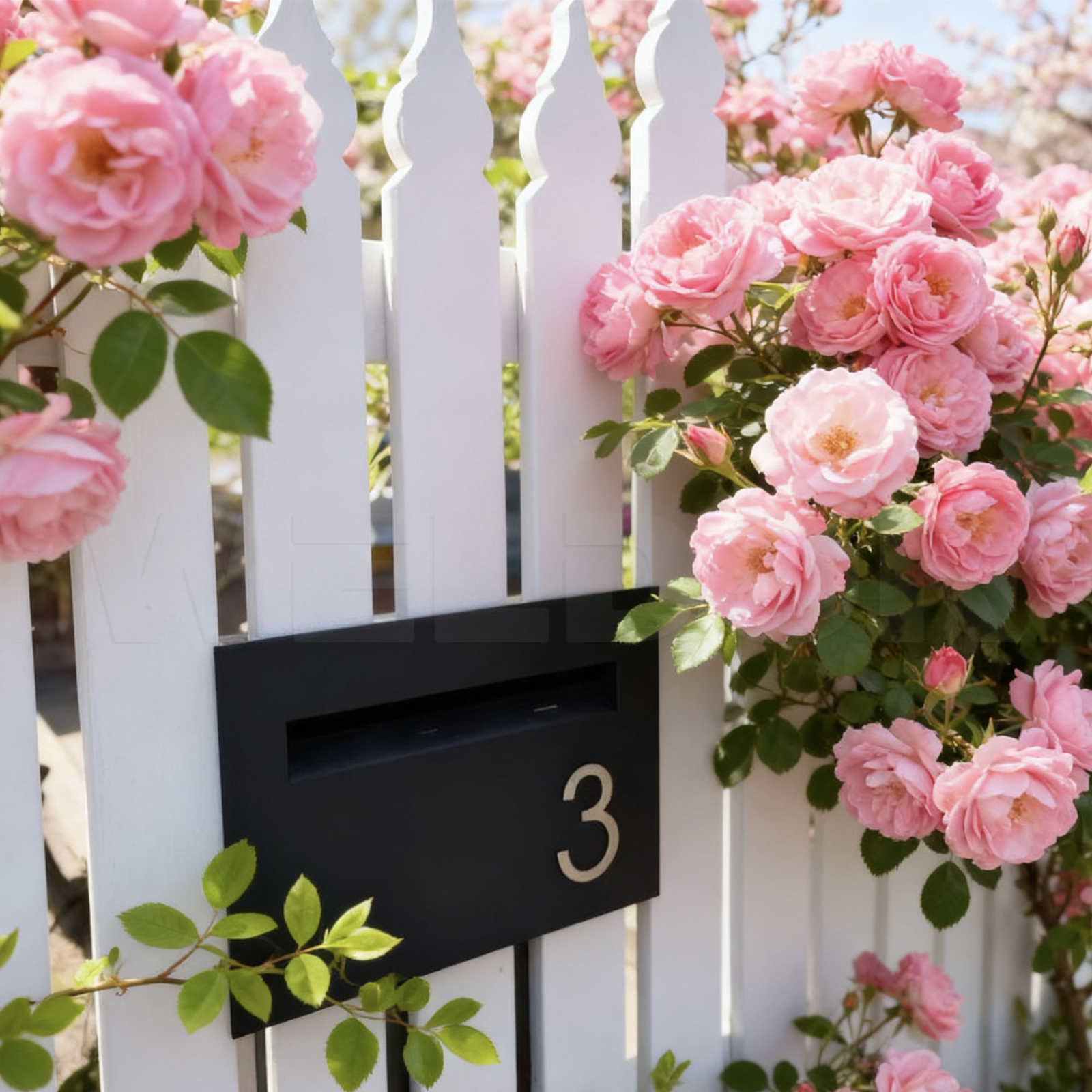
The Four Points Where Water Gets In
1. The parcel opening
A top-drop design relies on a baffle or hood to keep rain out while still accepting a parcel. Look for an opening that is set back from the front face and that has a lip or drip edge above it. If rain can enter vertically, no amount of coating will save the contents.
2. The door seal
Rear-access boxes need a seal that compresses along the full perimeter, not a foam strip that perishes in two summers. EPDM or silicone gaskets hold up far better than open-cell foam, and a channel-shaped rebate behind the door is more reliable than a flush join.
3. The lock and hinges
Lock barrels are the classic leak path. A cam lock with a rubber seal, mounted on a downward-facing or sheltered face, will outlast a top-mounted barrel by years. Stainless hinges and rivets prevent the rust streaks that appear within one coastal season on plated hardware.
4. The base and drainage
Any water that does get in must be able to leave. A slightly raised internal floor with drainage slots, or a base that is deliberately vented, prevents a box from becoming a bucket. Fully sealed bases with no drainage are a design fault in outdoor furniture of any kind.
Materials Compared for Australian Conditions
| Material | Weather performance | Notes |
|---|---|---|
| Powder-coated mild steel | Very good inland | Best value; specify a marine-grade coating near the coast |
| Hot-dip galvanised steel | Excellent | Ideal for coastal and high-rainfall areas; mill finish or over-coated |
| Aluminium | Excellent | Never rusts, but needs anodising or powder coat to resist pitting |
| Stainless steel 304 | Excellent inland | Can tea-stain in salt air; 316 is the coastal grade |
| UV-stabilised polymer | Good | No corrosion, but can become brittle and fade after a decade |
For most Australian homes, hot-dip galvanised steel with a powder coat over the top is the sweet spot: the zinc layer handles corrosion even where the coating is scratched, and the topcoat handles appearance.
Does an IP Rating Tell You Anything Useful?
IP ratings describe protection against dust and water ingress, but they are rarely applied to parcel boxes and even more rarely tested against the real pattern of use — a courier holding a lid open in horizontal rain, then leaving a wet carton inside. Treat an IP claim as a starting point, not proof. A better test is physical: the design of the opening, the quality of the gasket, and whether the base drains.
One useful question to ask any supplier is where the box has been installed at scale. A unit that performs on the New South Wales coast and in South East Queensland has already been tested by weather that a laboratory cannot reproduce.
Coastal Installations Need Extra Care
Australian conditions are classified by atmospheric corrosivity, and a coastal postcode can sit two categories above an inland one for the same steel specification (see Standards Australia for the classification framework). Within roughly one kilometre of the shoreline, salt deposition accelerates corrosion dramatically. Three practical steps:
- Specify galvanised or 316 stainless fixings, not zinc-plated screws that stain the render within a season.
- Choose a marine-grade powder coat rather than a standard interior-grade finish.
- Wash the unit down twice a year; salt that is not removed keeps working on the coating.
Coastal buyers should also avoid placing the box where it sits in permanent shade under a sprinkler line — constant damp with no drying cycle is harder on coatings than full sun.
Will Your Parcel Actually Stay Dry?
Even a well-designed weatherproof parcel box cannot keep a carton dry if a courier leaves it half in and half out of the opening. Two ways to manage this:
- Provide a cambered or hooded opening that guides a parcel inward as it is released.
- Give couriers a clear, protective drop zone — a lip or shelf inside the box means a parcel that is not pushed fully home still lands on a dry surface rather than on a wet ledge.
If your deliveries include electronics or documents, an internal floor mat that lifts the parcel clear of any standing water is a cheap and worthwhile upgrade, and it also reduces the noise of a package landing at night.
Ten-Point Inspection Checklist
- Opening faces away from prevailing weather, or is hooded and set back
- Full-perimeter gasket in EPDM or silicone, not foam
- Sealed cam lock on a sheltered or downward face
- Stainless hinges and rivets
- Drainage slots or a raised internal floor
- Marine-grade powder coat or hot-dip galvanising
- Wall thickness of at least 1.0 mm on the body
- Fixings supplied are the correct grade for your site
- No sharp internal edges that can tear a satchel
- Two-year minimum warranty on coating and hardware
Any supplier who cannot answer all ten questions with specific figures is probably selling an indoor-grade cabinet as an outdoor parcel point.
Frequently Asked Questions
Is a parcel box better than a plastic storage box?
For a few months, a plastic box will keep a parcel dry. For years of courier use, metal is the only option that holds its shape, resists forced entry and survives sustained UV without cracking.
Can I retrofit weather protection to an existing parcel box?
Partly. You can replace a foam gasket with EPDM, add a hood, and fit a floor mat — but you cannot fix a base with no drainage, which usually means replacing the unit.
Do I need drainage if the box is under a porch?
Yes. Condensation forms inside any sealed container that experiences temperature swings, even in a sheltered position.
How long should a weatherproof parcel box last?
A hot-dip galvanised, powder-coated steel box installed with stainless fixings should give 12–20 years inland, and 8–15 years in exposed coastal conditions with basic maintenance. A standard painted unit in the same coastal position may need replacing in three to five years.
Comparing specifications side by side is the fastest way to see the difference — a parcel box built for outdoor service always states its steel thickness, coating system and fixing grade.
Next Step
Confirm your corrosivity zone, decide whether you need a top-drop or rear-access opening, then check the ten-point list against any model you are considering. For a specification matched to your postcode and climate, contact WELDON with your location and mounting method, and ask which coating system is recommended for a coastal or inland install.